
AI vs Human Receptionist for Locksmith Businesses: Which One Actually Answers at 2 A.M.?
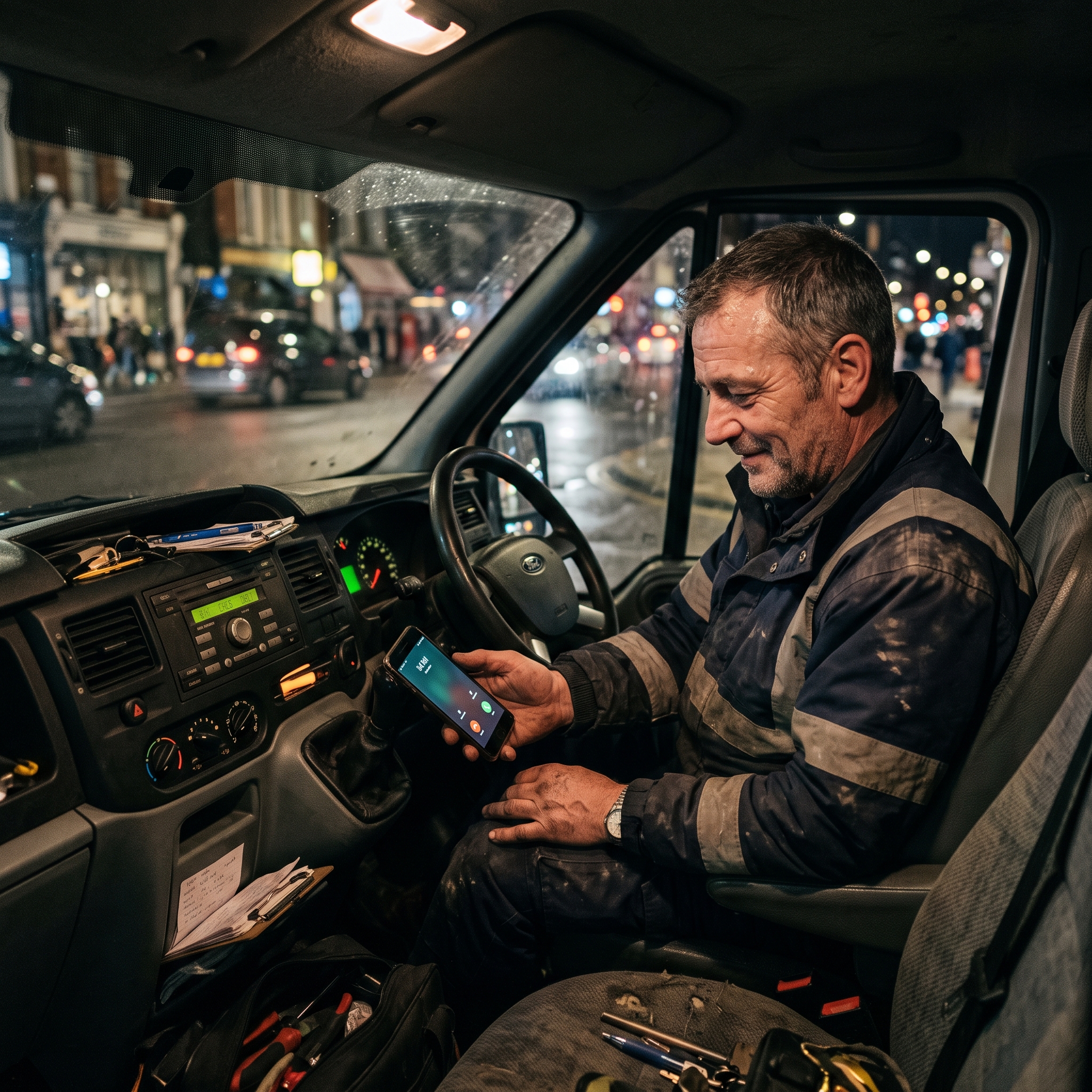
No trade lives and dies by the phone quite like locksmithing. When someone is standing in a parking garage at 11 p.m. with their keys locked in the car, they are not filling out a contact form. They are not leaving a voicemail. They are calling down the Google Maps list until a human — or something that sounds like one — picks up. If that's not you, the job is gone in under sixty seconds, and it's never coming back.
Industry call-tracking data consistently shows home services businesses miss 25–40% of inbound calls, and roughly 80% of callers who hit voicemail never leave a message. For most trades, that's expensive. For a locksmith, where the majority of calls are urgent and the caller has zero brand loyalty, a missed call is functionally a 100% lost job.
So every locksmith who's tired of answering the phone mid-rekey eventually asks the same question: hire a receptionist, or put AI on the phones? Here's the honest comparison.
What a Human Receptionist Costs a Locksmith Business
Start with the real, fully loaded number — not just the wage:
- Base pay: $16–$22/hour in most US markets, higher in metros
- Payroll taxes and workers' comp: add 12–18% on top
- Benefits: even modest health contributions push the total up fast
- Training time: 30–60 days before they can tell an automotive lockout from a commercial master-key inquiry, quote your trip fee correctly, or know which jobs you actually take
- Coverage gaps: lunch breaks, sick days, PTO, and the hiring scramble when they quit — front-desk roles turn over faster than almost any other position
All in, a full-time receptionist costs $2,800–$3,500 per month, and for that money you get phone coverage roughly 40 hours a week, Monday through Friday, 9 to 5.
Now look at when locksmith calls actually come in. Lockouts spike in the evening when people get home from work. Car lockouts cluster around bars, restaurants, and late shifts. Break-in repair calls come in the middle of the night, from people who are scared and need someone now. Commercial clients call at 6 a.m. when an employee can't get into the building. Your receptionist covers 40 of the week's 168 hours — and for a locksmith, the 128 uncovered hours are where the highest-urgency, highest-margin work lives.
There's a second problem nobody prices in: a receptionist can only answer one call at a time. Friday night, two lockouts call within the same five minutes. One gets answered. The other gets a busy signal or voicemail — and calls your competitor.
What an AI Receptionist Actually Does in 2026
Forget the phone-tree robots of a few years ago. A modern AI receptionist answers naturally, asks the right qualifying questions, and completes the job a front desk is supposed to do — without breaks, turnover, or overtime.
Omni, built specifically for home services businesses, structures this as an AI employee department rather than a single tool. The base tier includes four AI employees:
- Receptionist — answers every call within seconds, 24/7, including the 2 a.m. "I'm locked out of my house" calls that are pure gold for a locksmith
- Intake Specialist — captures name, callback number, exact location, job type (car, residential, commercial, safe), vehicle make and model if it's automotive, and urgency — structured the same way on every call
- Scheduler — books non-emergency work like rekeys, lock upgrades, and master-key consultations directly onto your calendar while the caller is still on the line
- Sales Manager — follows up by text and email with the quote requests that went quiet and the commercial prospects who said "let me think about it"
If a call does slip through while you're mid-job, missed-call textback fires within seconds — the caller gets a text before they've had time to tap the next locksmith on their screen. For a trade where speed-to-answer decides who gets the job, that text is often the difference between winning and losing the lead.
The cost for that entire stack on Omni's Solo plan: $99/month. Against a $2,800–$3,500/month hire, that's roughly 97% lower cost — before counting a single after-hours lockout a 9-to-5 employee never would have caught.
Head-to-Head: AI vs Human for a Locksmith Business
| Category | Human Receptionist | AI Front Office (Omni) |
|---|---|---|
| Availability | ~40 hrs/week | 24/7/365 |
| Late-night lockout calls | Voicemail | Answered live |
| Answer speed | 20–60 seconds, if free | Under 3 seconds |
| Simultaneous calls | One at a time | All of them |
| Lead intake | Notepad or memory | Structured, every call |
| Quote follow-up | When there's time | Automated text + email sequences |
| Booking rekeys & installs | Manual back-and-forth | Booked on the call |
| Review requests | Rarely consistent | Sent after every job |
| Monthly cost | $2,800–$3,500 | $99 |
| Turnover risk | High | None |
Where a Human Still Wins
An honest comparison cuts both ways.
A sharp office manager who's been dispatching for you for years does things no AI does: talks a panicked customer through checking for an unlocked back door, smells a scam call from a mile away, juggles a commercial account's billing quirks, knows which tech to send to the rough side of town at night. If someone on your team handles dispatch, invoicing, and commercial relationships, an AI receptionist doesn't replace them — it takes the phone off their plate so the ringing stops interrupting the work that actually needs judgment.
The real comparison isn't "AI versus your best employee." It's AI versus the receptionist you haven't hired yet, the voicemail box currently doing the job, or you — answering the phone one-handed while you're picking a lock in the rain.
The ROI Math for a Locksmith
Run your own numbers with deliberately conservative assumptions:
- Missed calls per week: say just 8 slip through — evenings, weekends, and while you're on a job
- Callers who leave a voicemail: ~20%, meaning 6–7 of those leads vanish entirely
- Legitimate, bookable jobs: assume only 3 of those were real
- Average ticket: $150 (a blend of lockouts, rekeys, and automotive work — many jobs run higher)
- Close rate when you actually answer: 60%, because urgent callers book with whoever picks up
That's roughly 2 recovered jobs per week — around $1,200–$1,300/month in recovered revenue from calls you're currently losing, against a $99/month cost. That math doesn't include a single commercial account, and one property-management contract landed from an answered 6 a.m. call can be worth more than the AI costs in a year. A human receptionist, by contrast, has to recover their entire $3,000 payroll in saved leads every month just to break even — while being off the clock during the exact hours lockout calls peak.
What This Looks Like Day to Day
A driver calls at 11:20 p.m., locked out of a Honda Civic outside a restaurant. The AI answers on the first ring, confirms the location and vehicle, captures the callback number, and flags it as urgent so you're notified immediately. While you're driving over, a second call comes in — a homeowner wanting three locks rekeyed after a roommate moved out. The AI handles it simultaneously, books them for Saturday morning, and texts the confirmation.
The next morning, the property manager who requested a master-key quote last week gets a polite follow-up text without you lifting a finger. The customer whose lockout you handled last night gets a review request, and your Google profile — the thing that decides whether you show up first for "locksmith near me" — picks up another five-star review. None of it required you, and none of it required a $3,000/month salary.
The Bottom Line
For a locksmith, the choice isn't really AI versus human — it's coverage versus gaps. A human front desk covers a quarter of the hours your phone rings, costs $34,000+ a year, and can't answer two lockouts at once. An AI front office covers all 168 hours, answers every call in seconds, follows up on every quote, and costs less than one recovered lockout per month.
If your best calls come in after dark, if you've ever lost a job because you couldn't answer mid-pick, or if voicemail is currently your night-shift employee — the math has already made the decision. The full cost breakdown, tier by tier, is laid out at Omni's pricing explained page. Start with the $99/month Solo plan, forward your calls, and stop handing your 2 a.m. jobs to the next name on the list.
Get the AI Playbook — $29
46 copy-paste prompts for marketing, sales, service, operations & finance. 90-day implementation plan included.
Get the PlaybookAI Prompt Pack for Real Estate Agents — $29
60+ prompts built from $250M+ in real transactions. Listings, negotiations, social media, sphere management.
Get the RE Prompt PackAI Social Media Content Calendar Kit — $29
Plan 90 days of content in under 1 hour. 35+ AI prompts, 12-week calendar, strategies for Instagram, LinkedIn, TikTok, Facebook & X.
Get the Calendar KitThe AI Email Marketing Playbook — $29
40+ copy-paste prompts for welcome sequences, sales funnels, newsletters, automation workflows & A/B testing. Build campaigns that convert.
Get the Email PlaybookThe n8n Automation Cookbook — $29
25 ready-to-deploy workflows for lead capture, CRM, invoicing, email, social media, reporting & e-commerce. Save $774/yr vs Zapier.
Get the n8n Cookbook✭ Complete AI Marketing Toolkit — All 5 Products for $119 (Save $26)
195+ prompts + 25 workflows across business, real estate, social media, email marketing & automation. One purchase, lifetime updates.
Get the Complete Bundle