
After-Hours Answering Service Pricing for HVAC Contractors: What You'll Actually Pay in 2026
After-Hours Answering Service Pricing for HVAC Contractors: What You'll Actually Pay in 2026
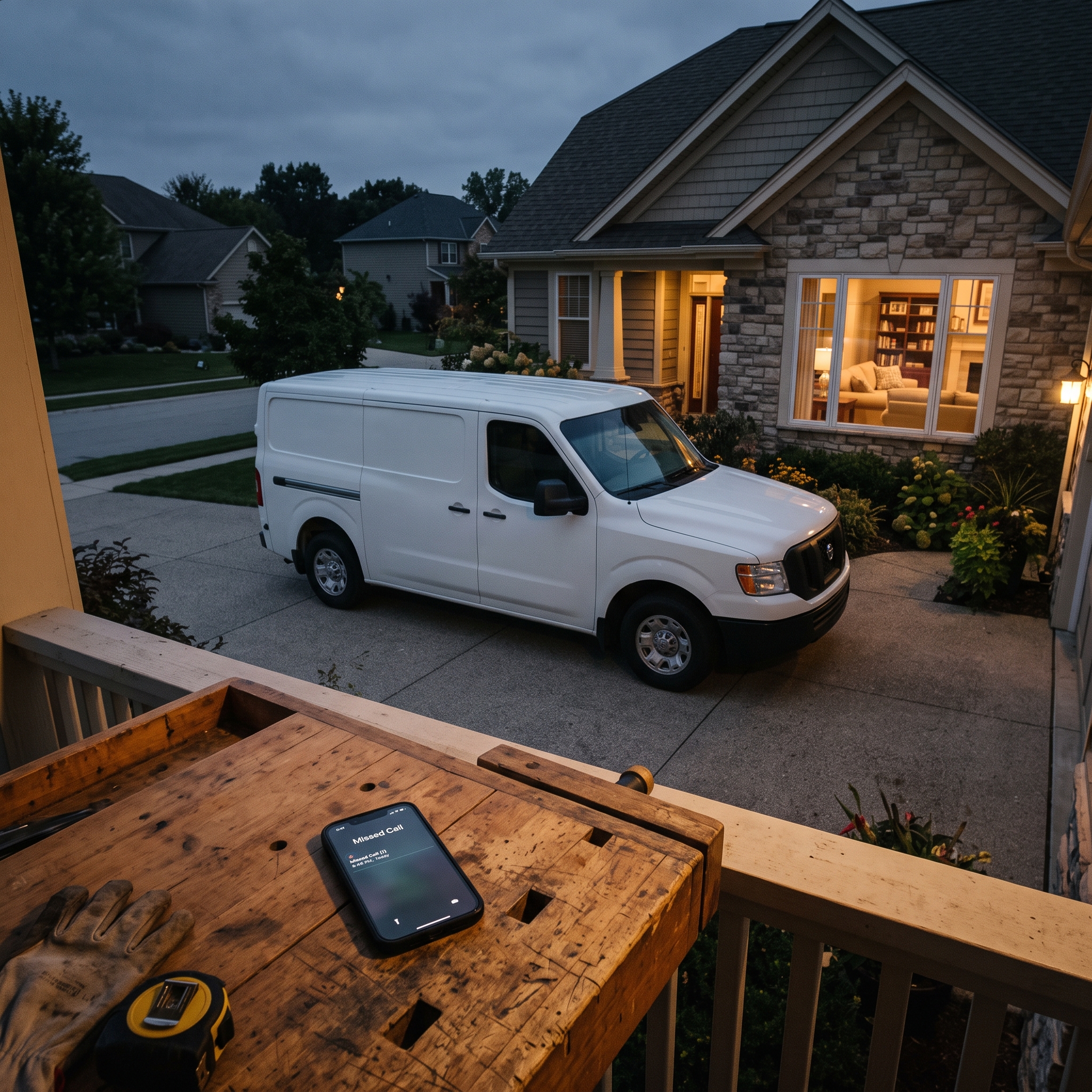
It's 9:40 PM in July. A homeowner's AC just died, the house is 84 degrees and climbing, and they're calling every HVAC company on Google Maps until someone picks up. If that someone isn't you, the $6,000 system replacement goes to whoever answered.
That's the math that makes after-hours answering worth paying for. The question is how much you should pay — and the answer varies wildly, from $89/month flat-rate AI plans to $1,500+/month human answering services with per-minute meters running.
This guide breaks down what after-hours answering services actually cost for HVAC contractors in 2026, which pricing model fits which size of shop, and the hidden fees that turn a "$200/month" quote into a $600 invoice.
The Three Pricing Models (And Which One Bleeds You)
Every after-hours answering option falls into one of three pricing structures.
1. Per-Minute Pricing (Traditional Human Answering Services)
The classic model. You pay for operator talk time, billed per minute, usually in 30- or 60-second increments.
Typical rates in 2026:
- Base plan: $50–$150/month, which includes a small bucket of minutes (often 50–100)
- Overage rate: $1.10–$2.00 per minute after your bucket runs out
- Effective monthly cost for a busy HVAC shop: $400–$1,200
Here's the problem for HVAC specifically: your after-hours calls are long. A panicked homeowner describing a dead furnace, giving their address, asking about emergency fees, and confirming a morning slot easily runs 5–8 minutes. At $1.50/minute, that's $7.50–$12 per call. Thirty after-hours calls a month puts you at $225–$360 in talk time alone, on top of the base fee.
Per-minute pricing also creates a perverse incentive: the service has no reason to keep calls efficient. You're paying for the meter to run.
2. Per-Call Pricing
Some services charge a flat rate per answered call — typically $1.25 to $3.00 per call for basic message-taking, or $5 to $15 per call if the operator does real dispatching (qualifying the emergency, paging your on-call tech, scheduling).
Per-call pricing is more predictable than per-minute, but watch the definition of "call." Many contracts count wrong numbers, spam, and hang-ups as billable calls. An HVAC number that gets hit with robocalls can rack up 50+ junk "calls" a month that you pay for.
3. Flat-Rate Monthly Pricing (AI Answering)
The model that's reshaped the market over the last two years. AI phone answering handles unlimited (or high-cap) call volume for a fixed monthly fee — typically $99 to $500/month depending on capability.
Because AI doesn't bill by the minute, a 10-minute emergency call costs you the same as a 30-second wrong number: nothing extra. For HVAC contractors — whose call volume spikes 3–5x during heat waves and cold snaps — this is the difference between a predictable line item and a surprise invoice every August and January.
What HVAC Contractors Actually Pay: Real Numbers
Here's how the total monthly cost shakes out for a typical owner-operated HVAC company taking 25–40 after-hours calls per month:
| Option | Base Cost | Effective Monthly Cost | Answers 24/7? |
|---|---|---|---|
| Voicemail | $0 | $0 (but ~62% of callers hang up) | No |
| On-call tech answers personally | $0 | Burnout + missed calls on jobs | Sort of |
| Per-minute human service | $75–$150 base | $400–$900 with talk time | Yes |
| Per-call human service | $50–$100 base | $250–$600 | Yes |
| Dedicated after-hours dispatcher (employee) | — | $2,500–$4,000 (part-time wages) | Yes |
| Flat-rate AI answering | $99–$499 | $99–$499, no overages | Yes |
Two things jump out. First, "free" voicemail is the most expensive option on the board — industry data consistently shows that around 62% of callers who hit voicemail hang up and dial a competitor. Second, the gap between human answering services and AI isn't just price; it's price predictability. AI plans cost the same in a July heat wave as they do in a mild October.
Hidden Fees That Inflate Your Quote
Answering service contracts are notorious for fees that don't show up in the advertised price. Before you sign anything, ask about:
- Holiday and weekend surcharges. Many human services add 10–25% for calls answered on holidays — exactly when HVAC emergencies spike.
- Setup and scripting fees. $50–$500 one-time to program your call flow, service area, and emergency criteria.
- Patch/transfer fees. $0.50–$1.50 every time the operator connects a caller to your on-call tech.
- Message delivery fees. Some services still charge per text or email relay.
- Billing increments. A "per-minute" rate billed in 60-second increments means a 61-second call bills as 2 minutes. Over hundreds of calls, rounding alone adds 15–30% to your bill.
- Minimum commitments and cancellation penalties. 6–12 month terms are common with legacy services.
A useful rule: ask for the effective per-call cost from a real invoice, not the rate card. Reputable providers will show you one.
The Other Side of the Ledger: What Missed Calls Cost
Pricing only makes sense against the revenue at stake. Run this quick calculation for your own shop:
- Average after-hours calls per month. Check your phone records for calls between 5 PM and 8 AM plus weekends. For most small HVAC companies it's 20–50.
- Percentage currently missed. If you rely on a tired on-call tech or voicemail, 30–50% is typical.
- Booking rate on answered calls. After-hours HVAC callers have urgent problems; 50–70% book when someone actually answers.
- Average ticket. Emergency repair calls run $350–$800; a percentage convert into $5,000–$12,000 replacements.
Worked example: 30 after-hours calls, 40% missed = 12 lost calls. At a 60% booking rate and a conservative $450 average ticket, that's $3,240/month in walked revenue — before counting a single system replacement. Against that number, even the most expensive answering option pays for itself several times over. A $99–$199 AI plan pays for itself with the first recovered call.
Human vs. AI After-Hours Answering for HVAC: Which Fits?
A human answering service makes sense when you run a larger operation with complex dispatch rules, multiple on-call rotations, and callers who need judgment calls a script can't cover — and you have the budget to absorb variable billing.
AI answering makes sense when you're an owner-operated or small-crew shop where the priorities are: never miss a call, capture the lead's details accurately, book the job or schedule the callback, and keep costs flat. Modern AI receptionists answer instantly (no hold queue at 11 PM), handle multiple simultaneous callers during a heat wave — something a single human operator physically can't do — and text back any call that slips through.
The honest weakness of legacy human services for HVAC is the shared-operator model: your caller waits on hold behind a dental office's patients, then talks to someone reading a generic script who can't answer "do you service heat pumps?" AI trained on your business answers that instantly, every time, at 3 AM on Thanksgiving.
What Omni AI Costs for HVAC Contractors
Full transparency on our own pricing, since this is a pricing guide:
- Solo — $99/month: Four AI employees, including an AI receptionist that answers every call 24/7, an intake specialist, a scheduler, and a sales manager. Includes missed-call text-back, so even calls that can't be answered get an instant text response, plus Google review management. This is the "stop missing after-hours calls" tier.
- Growth — $199/month: Seven AI employees. Adds win-back sequences for old customers, a Monday business snapshot text, a Business Pulse health score, and read-only CRM integrations.
- Professional — $499/month: Everything in Growth plus a full AI C-suite, two-way integrations, and multi-location support.
No per-minute billing, no per-call fees, no holiday surcharges, no overage line items during the summer surge. The August invoice matches the April invoice.
See the full breakdown of what each tier includes — and how the math compares to a traditional answering service — at thisisomni.ai/pricing-explained.
Bottom Line
For HVAC contractors in 2026, after-hours answering pricing lands in three bands:
- $250–$900/month for per-call or per-minute human services, with real variance during peak seasons
- $2,500+/month for an in-house after-hours dispatcher
- $99–$499/month flat for AI answering with no usage meters
Whichever direction you go, the decision framework is the same: multiply your missed after-hours calls by your booking rate and average ticket, and compare that number to the monthly fee. For nearly every HVAC shop, the most expensive answering service is still cheaper than the calls you're currently sending to your competitors.
The 9:40 PM caller with the dead AC is going to book with somebody tonight. The only question is whose phone gets answered.
Get the AI Playbook — $29
46 copy-paste prompts for marketing, sales, service, operations & finance. 90-day implementation plan included.
Get the PlaybookAI Prompt Pack for Real Estate Agents — $29
60+ prompts built from $250M+ in real transactions. Listings, negotiations, social media, sphere management.
Get the RE Prompt PackAI Social Media Content Calendar Kit — $29
Plan 90 days of content in under 1 hour. 35+ AI prompts, 12-week calendar, strategies for Instagram, LinkedIn, TikTok, Facebook & X.
Get the Calendar KitThe AI Email Marketing Playbook — $29
40+ copy-paste prompts for welcome sequences, sales funnels, newsletters, automation workflows & A/B testing. Build campaigns that convert.
Get the Email PlaybookThe n8n Automation Cookbook — $29
25 ready-to-deploy workflows for lead capture, CRM, invoicing, email, social media, reporting & e-commerce. Save $774/yr vs Zapier.
Get the n8n Cookbook✭ Complete AI Marketing Toolkit — All 5 Products for $119 (Save $26)
195+ prompts + 25 workflows across business, real estate, social media, email marketing & automation. One purchase, lifetime updates.
Get the Complete Bundle